The art of taking things away.


01 — Why Shunyata
Most high-end audio is marketed by what it can add to your system…
More detail. More openness. More weight. A bigger soundstage. More of whatever you have been told your system is missing. I’ve spent enough time in hi-fi to know how easy it is to get carried along by that language.
Shunyata was one of the first brands that made me think about the opposite. What happens if you don’t add anything at all — if you take away the noise, the interference, the limitations in the way power gets delivered, and then just leave the system alone?
It doesn’t have a sound I want you to hear. It has a problem it is trying to solve. That’s a much harder thing to demonstrate than making something sound immediately more impressive, and it’s the reason I’ve come to trust it.
You are not actually listening to Shunyata — you are listening to the rest of your system, finally sounding the way it should.


02 — The name
Śūnyatā. Emptiness.
It’s a slightly strange name for an audio company, and I don’t think I gave it much thought at first. Over time it started to make more and more sense.
The philosophy really is about subtraction. Not imposing another character on a system, not making everything bigger or brighter or more exciting — just removing what shouldn’t be there. It isn’t the fashionable approach, but I think it’s one of the more interesting ones.
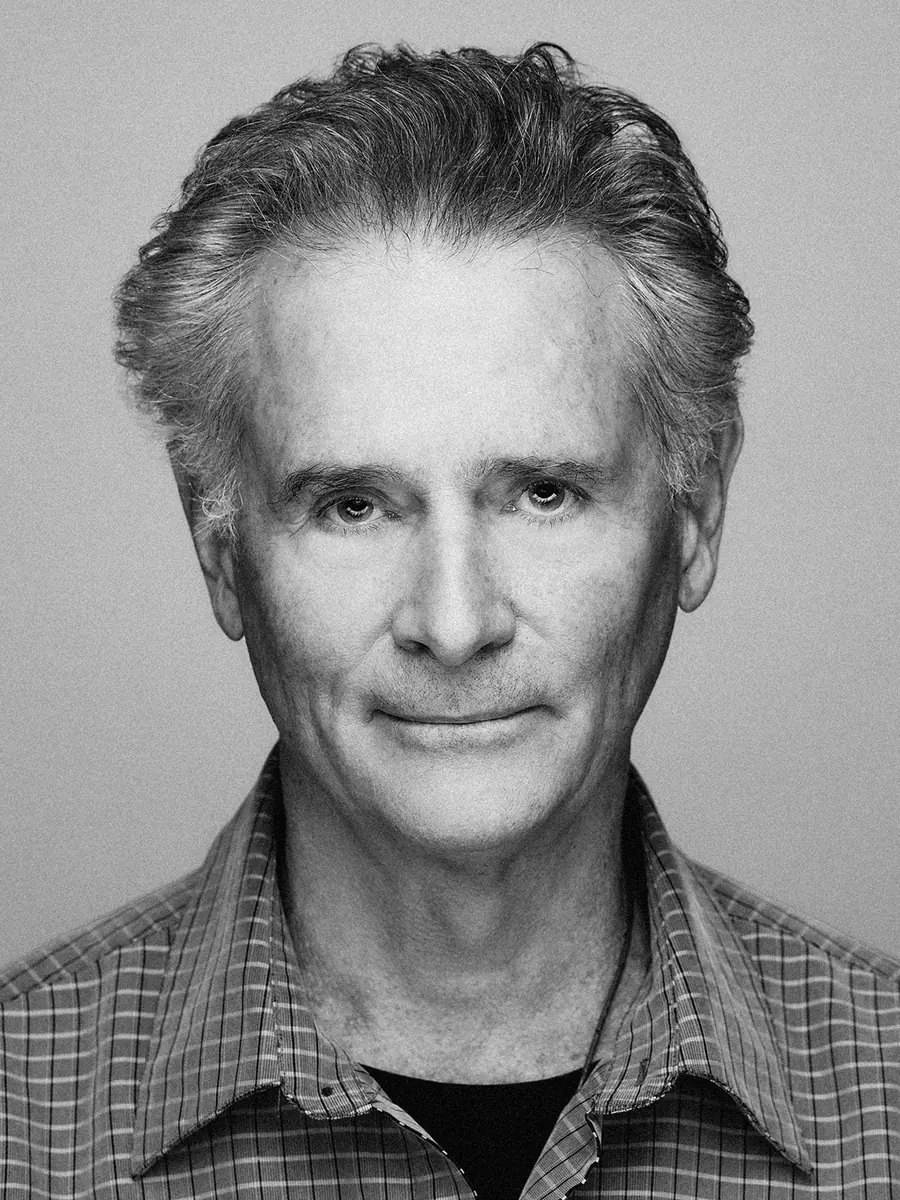
03 — Caelin Gabriel
Caelin is not your typical audiophile.
He wasn’t trying to build a better piece of hi-fi. His background was military research, working with instrumentation where very small amounts of electrical noise could compromise a measurement. The question was never what can we add — it was what is getting in the way.
That way of thinking still runs through the company. They aren’t especially interested in chasing fashion or making the biggest claim. They’re interested in finding the problem, understanding it properly, and working on it until it’s better. Which sounds obvious, and isn’t especially common in hi-fi.

04 — What I hear
The thing I notice is never the thing I expect.
People talk about more detail. I don’t think that’s really it. What changes is the effort of listening — you stop trying to hear the system, stop leaning forward waiting for the next thing to reveal itself, and just listen.
It’s difficult to describe, because nothing spectacular has happened. The room hasn’t changed. The recording hasn’t changed. But after ten years of demonstrating Shunyata I’ve seen that same reaction often enough to recognise it immediately. Something has simply become less intrusive.
05 — Ten years
Boyer started with Shunyata.
In 2016 the business was established as the Shunyata Distribution Company. A lot has changed since — it has grown and taken on other brands — but Shunyata has been there from the beginning.
So this isn’t a brand I’ve recently discovered and decided would look good in the portfolio. Ten years of demonstrations, dealer visits and conversations. Ten years of watching how products get developed, shipped and supported, and what happens on the occasions when something doesn’t go to plan. That is where you really learn about a company.
In 2025 Shunyata named Boyer its number one distributor worldwide. I’m proud of that, but the award is really just a marker for what sits underneath it: ten years of work, and ten years of trust.


In ten years I have never once had to make excuses for them, and in this trade that is a great deal rarer than it sounds.
06 — How they work
Shunyata is still made in Poulsbo.
Everything happens there. I’ve visited, spent time with the people making the products, and seen the care that goes into parts of the process most customers will never think about.
This isn’t the romantic idea of something being handmade. It’s about control. When your whole philosophy rests on eliminating very small electrical problems, you become obsessive about anything that might introduce one — and after ten years I don’t think the engineering and the object can really be separated.

07 — Hear it from them
Some of this you should hear from Shunyata rather than from me.
Caelin Gabriel and Richard Rogers on the thinking behind the company, the technology and the products, in their own words. No sales presentation — just the people who actually make it. It’s the material I’ve found most useful over the years.

Caelin Gabriel & Richard Rogers
Plays from YouTube · open it there instead
08 — The other reason I trust it
The technology isn’t limited to hi-fi.
Some of the same noise-reduction work is used in cardiac catheterisation, where electrical interference affects the clarity of very sensitive signals. I find that more interesting than almost any hi-fi claim.
In our world people argue about blacker backgrounds and greater transparency. In an operating theatre the reason for reducing interference is rather more obvious. I’m not offering it as proof of anything — only as a sign of how seriously the underlying problem gets taken.
09 — Why it’s here
I don’t want a portfolio where everything makes the same promise.
Boyer is built around brands with a point of view, and Shunyata’s is unusually clear: remove what shouldn’t be there.
Ten years of working with the company, and of listening to what these products do in real systems, brings me back to the same conclusion. The best thing Shunyata does is not to make a system sound more like Shunyata. It helps you hear what was already there. That’s why I still believe in it.
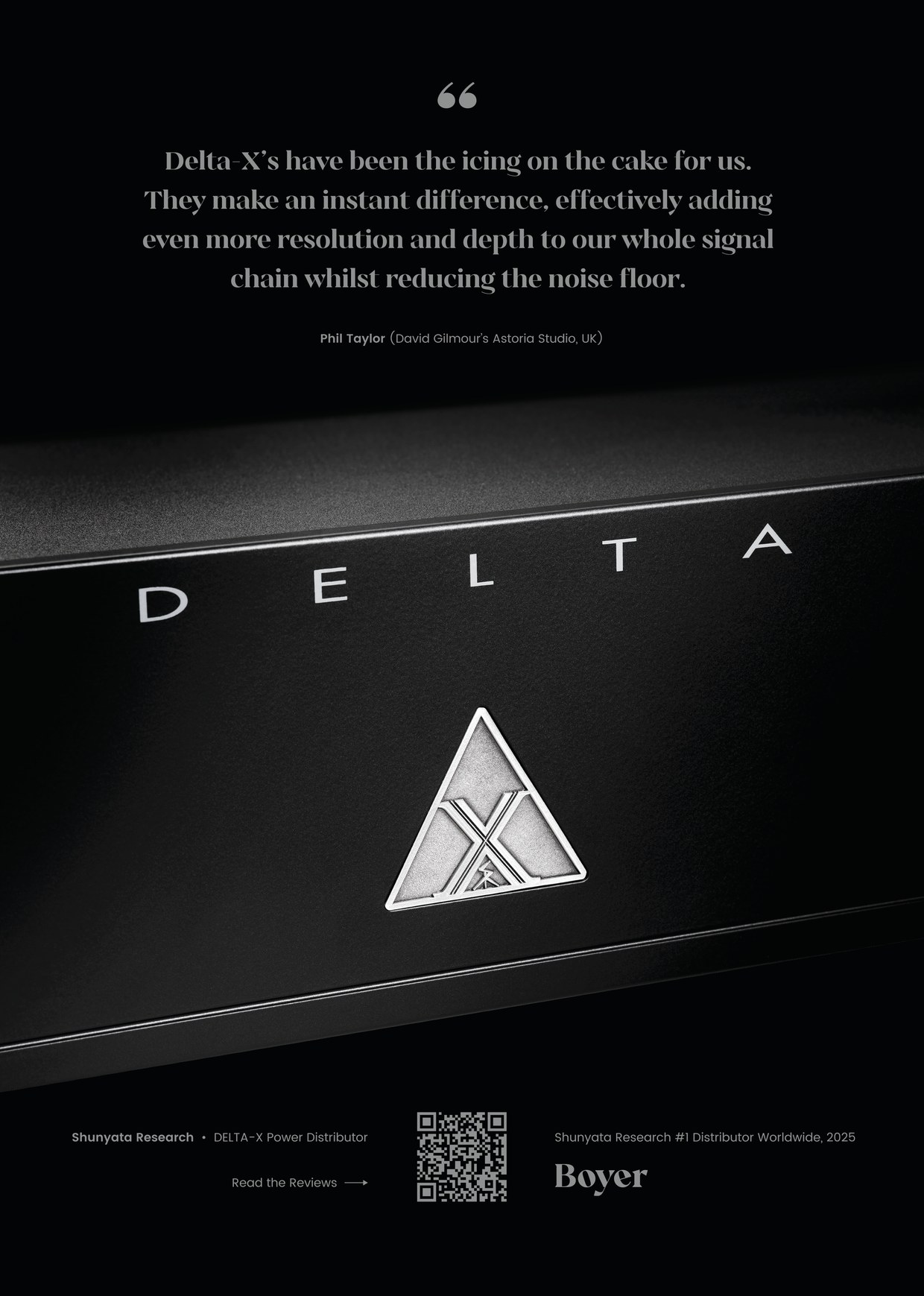
In print
Delta-X
Our full page for Hi-Fi+, built around a note from Phil Taylor at David Gilmour’s Astoria studio. It was printed in metallic ink, which is why the quote and the footline catch the light as you pass them.
Delta-X sits below Everest in the range and does the same job in a smaller chassis: take the noise off the mains and let the system get on with it.
Specifications and the full range are on shunyata.com, and UK pricing is in the price list below.